When it comes to outdoor security lighting, understanding "how many lumens do I need for outdoor security lights" is crucial. Brightness, measured in lumens, directly impacts the effectiveness of your security system. The right lumen count can deter intruders, enhance visibility, and improve safety.
Choosing the appropriate lumens often feels overwhelming. Some people may underestimate their needs, while others may go overboard, creating unnecessary glare. Factors like the area size, purpose of lighting, and fixture placement matter. For example, a large backyard may require more lumens than a small front porch.
Many recommend around 100 to 200 lumens for pathways and 300 to 700 lumens for areas that need higher security. Yet, these numbers aren't universal. They depend on personal preference and specific circumstances. Experience and local conditions can influence how you interpret these figures. Finding the right balance takes time. Aim for safety while avoiding excessive brightness that may hinder visibility.
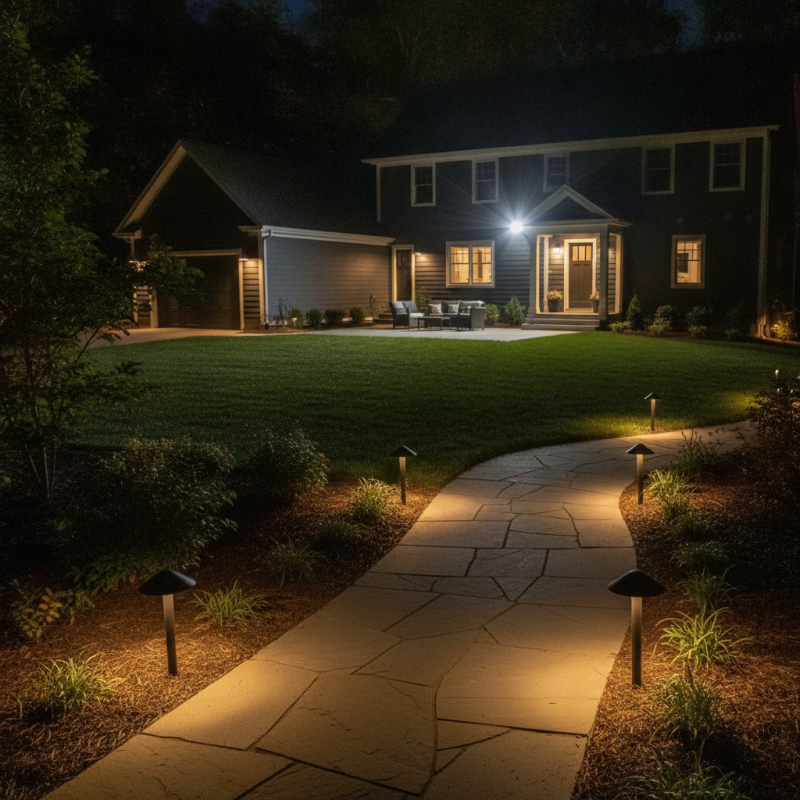
Factors Influencing the Lumens Required for Outdoor Security Lights
When determining how many lumens you need for outdoor security lights, there are several factors to consider. The purpose of your lights plays a crucial role. For general outdoor illumination, 100 to 300 lumens per fixture is often sufficient. However, for specific areas, like driveways or entryways, you may need more, around 300 to 700 lumens.
The area size and height of installation also impact your lumens requirement. Larger areas need brighter lights. Higher installations can also result in less effective illumination. For smaller spaces, lower lumen lights can be adequate.
Tips: Aim for a mix of ambient and task lighting. This can enhance visibility and security. Consider motion sensors. They can save energy while also providing instant brightness when needed. Regularly assess light placement to address any dark spots. Maintain your lights for optimal visibility.
How Many Lumens Do I Need for Outdoor Security Lights?
The chart below illustrates the recommended lumens needed for various outdoor security lighting scenarios, helping homeowners determine the appropriate brightness for their specific needs.
Recommended Lumens for Different Outdoor Areas and Applications
When it comes to outdoor security lighting, understanding lumens is crucial. Recommended lumens can vary significantly based on the area and its activities. For general outdoor areas like driveways or patio spaces, experts suggest between 700 to 1,000 lumens. This brightness ensures visibility without being overwhelmingly blinding.
For specific applications, such as entrances or yard lighting, a lower lumen count may suffice. A range of 300 to 500 lumens can provide adequate illumination while enhancing security. However, more complex areas like garages or commercial lots require higher brightness. Here, lumens can soar above 1,200 to ensure complete coverage. According to the Illuminating Engineering Society, safety is diminished if illumination is below 300 lumens per square meter.
Proper installation counts, too. If fixtures are too far apart, brightness may be inconsistent. Shadows can create blind spots. Instead of relying solely on one light source, spread fixtures evenly. Test various luminance levels. Adjust as necessary to find the right balance for your space. Ultimately, too much light may cause glare, while too little can create a sense of vulnerability.
Understanding the Relationship Between Lumens and Light Coverage
When it comes to outdoor security lights, understanding lumens is crucial. Lumens measure the total visible light emitted by a source. The more lumens a light produces, the brighter it is. For security purposes, brightness is vital to protect homes and deter intruders.
Choosing the right lumen range affects coverage. For small yards, lights with 700-1,000 lumens suffice. These provide adequate illumination without being overly harsh. Larger areas may require 1,500-3,000 lumens for effective coverage. It's important to consider how light disperses. Lights that spread light widely reduce shadows, making safe spots more visible.
Yet, too much light can create glare, which might be counterproductive. Reflective surfaces can amplify brightness, raising risks and discomfort. Balancing lumen output with effective coverage is essential. Each space has unique requirements. Testing different options can lead to the best results. Evaluating light distribution helps in setting up the most effective security system.
Choosing Between LED and Traditional Bulbs for Outdoor Security Lighting
When considering outdoor security lighting, the choice between LED and traditional bulbs is crucial. LED lights are becoming increasingly popular due to their energy efficiency and longevity. According to a report by the U.S. Department of Energy, LEDs use at least 75% less energy than incandescent bulbs. This significant reduction not only cuts costs but also reduces your carbon footprint.
Traditional bulbs may offer a warm glow, but they typically require more frequent replacements. In an outdoor setting, this can be inconvenient and costly. A study conducted by the Lighting Research Center indicated that LED lights can last up to 50,000 hours, whereas traditional bulbs last only about 1,000 hours. This stark contrast highlights the advantages of choosing LEDs.
Moreover, lumens play a vital role in outdoor security. Depending on your environment, security lights should typically emit at least 700-1,000 lumens to ensure adequate visibility. LEDs are designed to provide bright illumination, which contributes to overall safety. However, it's essential to assess the specific needs of your area, like light pollution and neighbor considerations, to find the right balance.
Tips for Maximizing Efficiency and Effectiveness of Security Lights
When considering outdoor security lights, maximizing their efficiency and effectiveness is vital. Choosing the right lumen output can dramatically affect visibility. However, the placement and use of these lights also matter. No single solution fits all scenarios. Understanding your space helps in making informed decisions.
One tip is to prioritize areas that require the most illumination. Focus on pathways, entrances, and potential blind spots. Installing lights at strategic heights can enhance coverage. Aim for 700 to 1300 lumens for general security tasks. If you need brighter lights for large areas, consider options that go up to 2200 lumens.
Another suggestion is to integrate motion sensors. These sensors can save energy and reduce light pollution. It's not always necessary for lights to run continuously. Watch for inconsistencies in light performance. Regular maintenance can prevent issues and improve reliability. Test your setup on different nights to see how it performs under various conditions.
FAQS
: The main factors include the purpose of the lights and the size of the area.
For general areas, about 100 to 300 lumens per fixture is usually sufficient.
Driveways and entryways typically need between 300 to 700 lumens for better visibility.
Yes, higher installations may reduce effectiveness, making brighter lights necessary.
Aim for a mix of ambient and task lighting to improve security and visibility.
For those areas, lumens can exceed 1,200 to ensure complete coverage and safety.
LEDs are generally better due to their energy efficiency and longer lifespan.
LEDs can last up to 50,000 hours, while traditional bulbs last about 1,000 hours.
Security lights should emit at least 700-1,000 lumens depending on the environment.
Spread fixtures evenly and regularly test brightness levels to address any dark spots.
Conclusion
Determining "how many lumens do I need for outdoor security lights" depends on various factors such as the specific area being illuminated, the installation height, and the level of security required. It is essential to consider the type of outdoor space—areas like driveways, patios, and entryways each have different lumen needs. For instance, a well-lit pathway may require around 100-200 lumens per fixture, while areas that demand higher visibility for security may need upwards of 700 lumens.
Additionally, understanding the relationship between lumens and light coverage can enhance the effectiveness of your security lighting. Choosing between LED and traditional bulbs also plays a crucial role, as LEDs typically provide higher lumens per watt and have longer lifespans. Finally, maximizing the efficiency of security lights can involve using timers, sensors, and proper positioning to ensure optimal performance.

